Planning a vacation home at Solterra Resort can feel exciting and a little overwhelming at the same time. You want a home that looks beautiful, works well for guests, and supports smoother ownership from one stay to the next. The good news is that smart design choices usually come down to comfort, durability, and layout, not overdoing every room. Let’s dive in.
Start With How Solterra Works
Solterra Resort is a vacation-home community in Davenport with a shared amenity center, not a hotel-style setup. Guests have access to features like a heated pool, lazy river, waterslide, cabanas, sports courts, a café, and a 24/7 fitness center, while the homes themselves are independently owned and managed.
That matters when you design your home. Since the resort already offers major recreation, your property does not need to compete by becoming an all-in-one entertainment complex. In most cases, your best return comes from creating a comfortable, easy-to-use home base where guests can sleep well, gather easily, and reset between resort days and area outings.
It also helps to understand the guest fee structure. Solterra notes a one-time resort amenity fee per stay based on occupancy, with $35 for parties of 12 or fewer and $45 for 13 or more. That makes group-friendly planning especially important if your goal is to serve family and friend travel smoothly.
Design for Group Stays
Vacation-home demand in Orlando-area resort markets is strongly tied to family and friend travel. Expedia Group reported that 34% of travelers planned more trips with family and friends, and 42% said they book vacation homes with amenities they do not have at home or cannot usually afford.
At the same time, guest expectations are practical. Vrbo guidance emphasizes personal space and clear bed information, and AirDNA’s 2025 and 2026 bedroom-count analysis suggests homes with more than four bedrooms can perform well for group-use travel. For a Solterra home, that points to layout choices that make sleeping arrangements and daily flow easy to understand.
Prioritize Bedroom Mix
A guest-friendly home often performs better when the bedroom plan is balanced. Instead of putting too much square footage into formal living space, focus on room types that fit how groups actually travel.
A strong setup may include:
- One comfortable primary suite
- At least one additional king or queen bedroom, if the floor plan allows
- One kid-friendly room with bunks or twin beds
- Clearly defined sleeping arrangements for each room
This kind of mix helps families, multi-generational groups, and friend groups spread out without confusion. It also makes your home easier to market because guests can quickly picture who sleeps where.
Keep Themes Focused
Themed rooms can still be a smart design feature, especially in the Orlando resort market. The key is moderation. A single themed bedroom or a playful accent wall can add personality without making the entire home feel too specific or dated.
That approach aligns well with what nearby resort communities promote. In the broader market, homes with themed bedrooms are often still anchored by bigger value drivers like bedroom count, private pools, and functional gathering spaces.
Make Shared Spaces Flexible
In a vacation home, flexibility usually beats formality. A loft, den, or bonus area can serve several purposes during the same stay, which is more useful than a room with only one function.
For example, a flexible space can become a kids’ hangout in the afternoon, a quiet work corner in the morning, or an overflow sleeping area when needed. Because Solterra already offers major shared amenities on property, many owners benefit more from practical indoor versatility than from building out highly specialized entertainment rooms.
Focus on Easy Flow
Guests notice circulation more than you might expect. They want enough seating, a dining area that supports shared meals, and sight lines that let people stay connected while cooking, relaxing, or supervising kids.
Open-concept great rooms tend to support that well. If you are choosing furnishings or staging a resale property, keep traffic paths clear and avoid oversized pieces that make the room look full but feel harder to use.
Do Not Overlook Laundry
Laundry access is one of the most useful features in a vacation home, especially for longer stays and faster turnovers. D.R. Horton’s Solterra feature sheet includes an interior laundry room with washer and dryer connections, which reinforces how practical this space is in the community’s ownership model.
For guests, laundry adds convenience. For owners, it supports cleaning cycles, pool-towel management, and a more efficient turnover routine between bookings.
Choose Finishes That Hold Up
A guest-friendly home should look polished, but it also needs to stand up to frequent use. Solterra’s builder feature sheet already points to a durable baseline, including granite countertops, ceramic tile in main living areas, carpet in bedrooms, stainless appliances, a screened private pool, a tile roof, and cable outlets in the family room and all bedrooms.
Because that shell is already fairly resilient, your highest-impact upgrades are often the ones guests feel and use every day. In many cases, that means putting your budget into comfort and functionality instead of replacing materials that are already serviceable.
Spend on Visible Comfort
The most worthwhile upgrades are usually the easiest for guests to notice. Think less about dramatic statement pieces and more about the features that improve sleep, relaxation, and everyday convenience.
Smart priorities often include:
- Comfortable mattresses
- Blackout shades in bedrooms
- Durable sofas
- Layered lighting
- Smart TVs
- Pool-deck furniture designed for repeated outdoor use
These choices can improve both the in-person experience and listing photos. They also tend to age better than trend-heavy décor.
Pick Durable Furnishings
Short-term-rental furniture sees heavy traffic. Houzz recommends sturdy, easy-clean furniture and stain-resistant fabrics for vacation rentals, and separate Houzz patio guidance recommends durable outdoor materials such as teak, stainless steel, or coated metal.
At Solterra, that makes practical sense. Wipeable dining surfaces, weather-resistant seating, and replaceable accent pieces are usually better long-term investments than fragile furnishings that look great for one season but wear out quickly.
Keep the Style Bright and Broadly Appealing
A restrained, resort-style palette often works best in a community like Solterra. Bright, clean interiors with neutral tones tend to photograph well and remain appealing across different guest types.
This does not mean your home has to feel plain. It means using the vacation feeling in a controlled way, with light finishes, simple décor, and a few thoughtful accents rather than a highly personalized design scheme.
What Usually Works Well
For Solterra homes, a guest-friendly design direction often includes:
- Light, neutral wall colors
- Clean-lined furniture
- Simple layered bedding
- Minimal but warm décor
- A few family-friendly or vacation-inspired accents
This style also aligns naturally with Pristine International Realty’s approach to turnkey resort homes. Clean execution, bright photography, and easy livability often do more for long-term appeal than highly customized interiors.
Treat Outdoor Space as a Core Feature
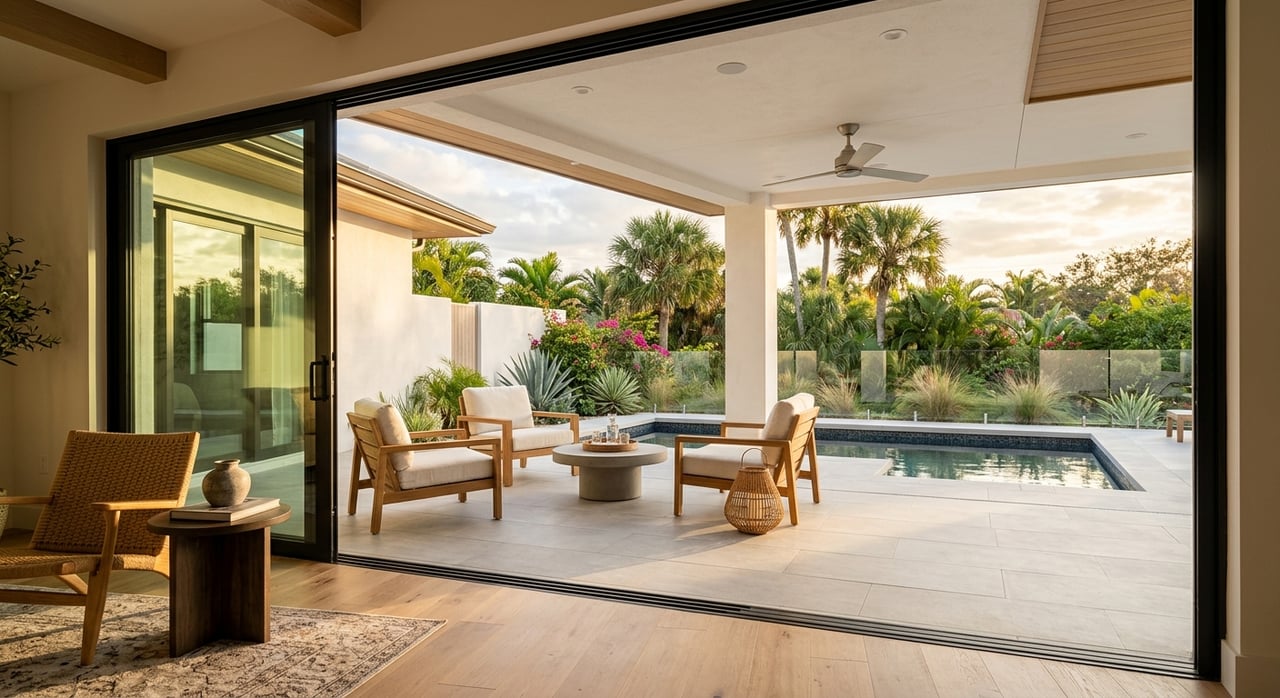
In Orlando-area resort communities, outdoor living matters. Solterra homes often include screened private pools, and that outdoor area is one of the first features guests look for when comparing properties.
You do not need an extravagant backyard plan to make the space work. What matters most is usability.
Improve Pool-Deck Function
A guest-friendly pool area should support several simple needs at once. Guests want a place to sit, dry off, eat a casual meal, and watch children comfortably.
A strong setup may include:
- Durable lounge seating
- A practical outdoor dining table
- Easy-care materials
- A layout that keeps walkways open
Since outdoor furniture handles sun, moisture, and frequent turnover, durability matters just as much here as it does inside.
Know When Approval Is Required
Interior design usually gives you more flexibility than exterior work at Solterra. According to the HOA architectural guidelines, written approval is required before exterior changes or lot modifications, and the guidelines discourage overly bright or highly contrasting exterior colors.
That means exterior upgrades should be treated as approval-based decisions, not casual updates. If you are thinking about landscaping changes, screening projects, or other outside improvements, it is wise to verify requirements before making plans.
Compete on Livability, Not Excess
Nearby Orlando-area resort communities help set guest expectations. ChampionsGate offers vacation rentals ranging from 4- and 5-bedroom townhomes to 8- and 9-bedroom villas with a large amenity complex, while Reunion Resort promotes homes from 3 to 15 bedrooms and highlights features like private pools, movie-theater-style rooms, and themed bedrooms in some properties.
That comparison is helpful because it shows what Solterra does not need to imitate. A well-planned 4- to 6-bedroom home can still feel premium when it has the right bed mix, usable outdoor space, strong photos, and a clean, comfortable setup.
In other words, your home does not need extreme customization to stand out. It needs to make family logistics easy.
Design With Operations in Mind
A great vacation home is not only about guest experience. It should also support smoother ownership.
Florida requires a DBPR vacation-rental license before operation, and Polk County imposes a 5% Tourist Development Tax on transient rentals that must be registered and remitted monthly by owners or operators. While those are operating requirements rather than design features, they reinforce a practical point: your best design investments are the ones that reduce friction, support turnover, and make management easier.
That is one reason thoughtful planning matters so much in Solterra. The best homes are not just attractive. They are easier to run.
A Smart Solterra Design Checklist
If you want a simple way to think through your next move, start here:
- Build around group travel, not formal spaces
- Prioritize a practical bedroom mix
- Use themed décor sparingly
- Make bonus rooms flexible
- Invest in mattresses, shades, seating, and lighting
- Choose durable indoor and outdoor materials
- Keep the style bright, clean, and easy to photograph
- Treat the pool deck as a major guest feature
- Confirm HOA approval before exterior changes
- Focus first on upgrades that improve guest satisfaction and turnover efficiency
Designing a guest-friendly vacation home at Solterra Resort is really about choosing what works. When your home supports group stays, photographs well, and holds up over time, it can feel more inviting for guests and more manageable for you as an owner.
If you are considering buying, furnishing, or preparing a Solterra property for sale, Pristine International Realty can help you evaluate layout, positioning, and next-step opportunities with local resort-market insight.
FAQs
What makes a Solterra vacation home guest-friendly?
- A guest-friendly Solterra home usually has a practical bedroom mix, flexible shared spaces, durable furnishings, a usable pool area, and easy features like laundry access.
How many bedrooms work best for a Solterra Resort vacation home?
- In Solterra, homes with more than four bedrooms can align well with group travel demand, especially when the bed mix supports families and friend groups clearly.
Should you add themed rooms in a Solterra vacation home?
- A themed room can be a smart touch, but it usually works best as a focused accent rather than a whole-house design style.
Do exterior upgrades at Solterra Resort need approval?
- Yes. Solterra HOA guidelines state that written approval is required before exterior changes or lot modifications.
What upgrades usually matter most in a Solterra rental home?
- The most practical upgrades are often guest-visible items such as comfortable mattresses, blackout shades, durable seating, layered lighting, smart TVs, and weather-resistant pool-deck furniture.
Are there operating requirements for a Solterra vacation rental in Polk County?
- Yes. Florida requires a DBPR vacation-rental license before operation, and Polk County requires registration and monthly remittance of the 5% Tourist Development Tax for transient rentals.